Dhanteras 2026: Physical Gold vs Gold ETF vs Gold Mutual Fund, What Smart Investors Buy
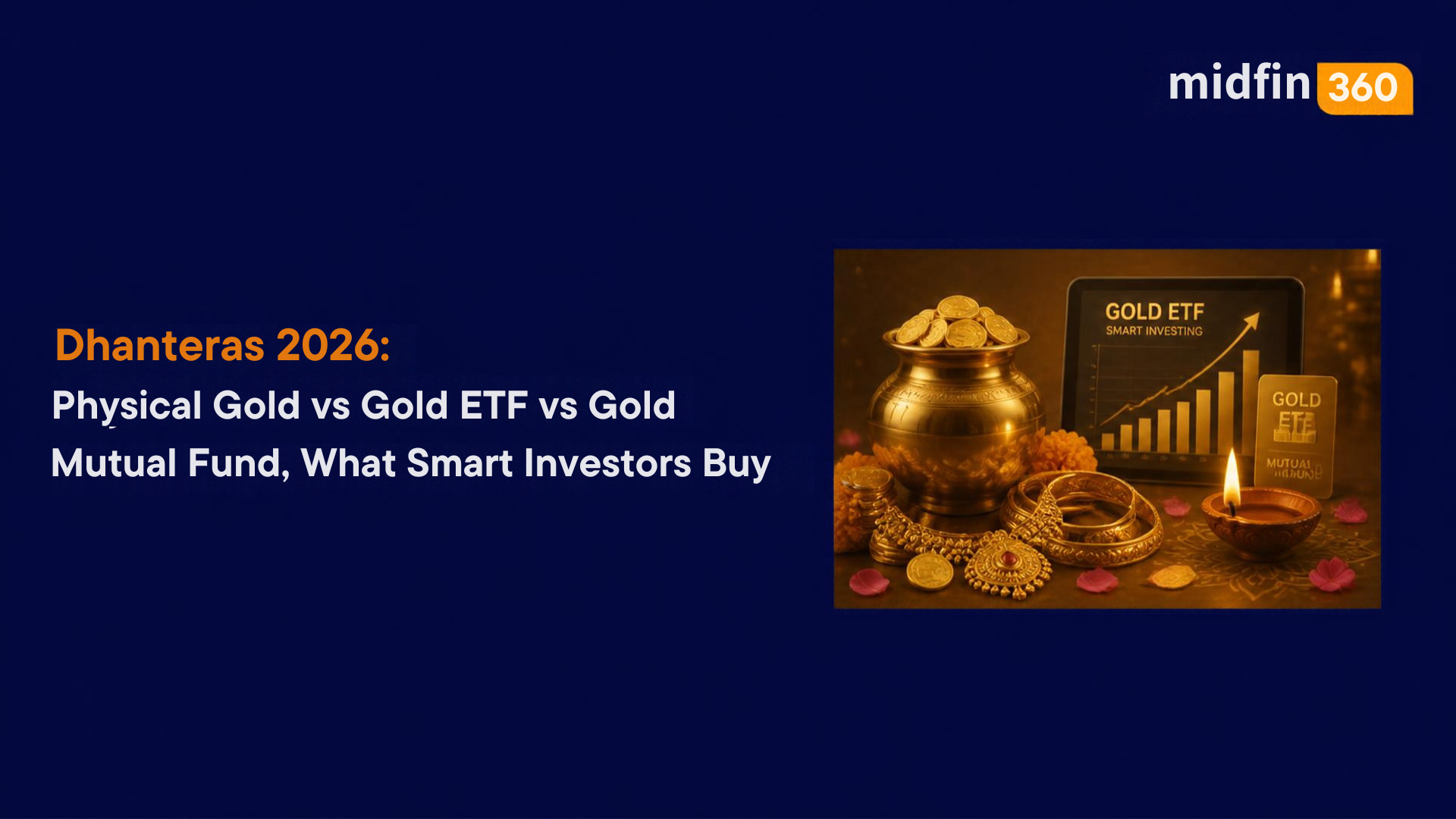
For generations, the festival of Diwali has been synonymous with prosperity, wealth creation, and the auspicious purchase of gold. With the Dhanteras 2026 date set for November 6, millions of Indian families are preparing to honor this centuries-old tradition. However, as the Indian financial landscape evolves, the way we participate in this cultural milestone is undergoing a massive transformation.
Today, modern investors realize that buying physical jewelry is wonderful for emotional and cultural reasons, but it is highly inefficient for pure wealth creation. If your goal is to build a robust financial portfolio, your Dhanteras 2026 gold investment strategy requires a more sophisticated approach.
The financial markets offer seamless, regulated alternatives that strip away the hidden costs of physical gold while retaining its value as an inflation hedge. If you are debating the best way to buy gold on Dhanteras, you are likely caught in the classic gold ETF vs physical gold or gold mutual fund vs gold ETF dilemmas.
In this comprehensive guide, we will decode these investment avenues. We will analyze the heavy making charges physical gold carries, explain the nuances of gold ETF taxation 2026, answer whether you should start a gold SIP for Dhanteras, and guide you on exactly how much gold in portfolio makes sense for your long-term goals.
The Cultural vs. Financial Debate: Best Way to Buy Gold on Dhanteras
Before diving into financial instruments, it is essential to acknowledge the cultural weight of gold in India. Buying physical gold for weddings, gifting, or personal adornment holds immense sentimental value. However, a piece of jewelry is fundamentally a consumer good, not an optimized financial asset.
If you are asking, "is it good to buy gold on Dhanteras 2026?", the answer depends entirely on how you buy it.
Historically, gold acts as a powerful hedge against inflation, preserving your purchasing power when fiat currencies lose value. We cover how distinct asset classes protect your real wealth in our detailed analysis: can mutual funds beat inflation?. To effectively capture this inflation-beating potential, you must minimize the friction costs associated with your purchase. This is where the transition from physical gold to "paper" or "digital" financial gold becomes critical for your Dhanteras 2026 gold investment.
(Note: While Sovereign Gold Bonds (SGBs) were historically a popular option, the government and the Reserve Bank of India (RBI) have currently paused fresh issuances. Since new SGBs are not available in the primary market for this festive season, ETFs and mutual funds remain the premier financial routes.)
The Traditional Route: Physical Gold and Its Hidden Costs
When you walk into a jewelry store to make your Dhanteras 2026 gold investment, you face several immediate financial headwinds:
- The Burden of Making Charges: The most significant drawback is the making charges physical gold attracts. These charges can range from 8% to 25% of the total gold value. The moment you walk out of the store, your investment is already down by that percentage because making charges are never recovered upon resale.
- Storage and Security: Holding physical gold requires secure storage, often necessitating bank lockers which incur annual maintenance fees, further eating into your CAGR (Compound Annual Growth Rate).
- Purity Concerns: Unless you are buying hallmark coins, assessing the exact purity of jewelry during resale can be subjective and often leads to depreciation in value.
The Paper Gold Face-Off: Gold ETF vs Physical Gold
To solve the inefficiencies of physical storage and making charges, the financial industry introduced Gold Exchange Traded Funds (ETFs).
A Gold ETF is a financial instrument that tracks the domestic physical gold price. Each unit of a Gold ETF generally represents 1 gram (or a fraction) of physical gold of 99.5% purity, securely stored in vaults managed by the Securities and Exchange Board of India (SEBI) regulated custodians.
When evaluating gold ETF vs physical gold, the ETF wins heavily on financial efficiency:
- Zero Making Charges: You buy gold at the actual market rate, minus a very small expense ratio.
- High Liquidity: You can buy or sell ETF units on the stock exchange during market hours at transparent, real-time prices.
- Guaranteed Purity: Your units are backed by institutional-grade physical gold.
However, buying a Gold ETF requires a dedicated Demat account. If you want to understand the exact mechanics of exchange-traded products, read our comprehensive guide on what are index ETFs and how do they differ from index funds.
A Note on Digital Gold vs Gold ETF
You might see payment apps offering "digital gold." In the digital gold vs gold ETF comparison, smart investors strongly prefer ETFs. Digital gold is largely unregulated by SEBI, often carries high hidden spreads (differences between buying and selling prices), and may charge storage fees after a certain period. ETFs offer the safety of strict SEBI oversight.
The Ultimate Convenience: Gold Mutual Fund vs Gold ETF
What if you do not have a Demat account, or you simply prefer the automated discipline of traditional mutual funds? This is where Gold Mutual Funds enter the picture, settling the gold mutual fund vs gold ETF debate for many retail investors.
A Gold Mutual Fund is essentially a "Fund of Funds" (FoF). The mutual fund manager collects money from investors and invests it directly into the AMC's own Gold ETF.
- No Demat Required: You can invest in a Gold Mutual Fund just like you invest in any standard equity or debt mutual fund, using just your KYC (Know Your Customer) details.
- Automated Investing: You can easily set up a Systematic Investment Plan (SIP) in a Gold Mutual Fund, whereas automating an ETF purchase is slightly more complex.
- Slightly Higher Cost: Because it is a Fund of Funds, you pay a slightly higher expense ratio compared to a direct ETF. We break down the cost-benefit analysis of these layered structures in our guide: ETF vs FoF: which is better for your wealth journey.
If you are a beginner wondering, "can I buy gold mutual fund on Dhanteras?", the answer is a resounding yes. You can make a lump-sum purchase on the midfin360 platform on the exact day to honor the tradition financially. If you are entirely new to this ecosystem, our mutual funds for beginners 90-days checklist is the perfect starting point.
Smart Wealth Creation: Gold SIP for Dhanteras
While making a lump-sum Dhanteras 2026 gold investment is culturally satisfying, the most effective way to build a gold allocation over time is through a gold SIP for Dhanteras.
Instead of waiting for one day a year to deploy your capital—which exposes you to the risk of buying at a temporary price peak—starting a Systematic Investment Plan (SIP) allows you to buy gold mutual fund units every month.
This triggers rupee cost averaging. When gold prices dip, your fixed monthly SIP buys more units; when prices soar, it buys fewer. Over a 10-year horizon, this automated discipline usually results in a significantly better average purchase price than trying to time the market on a specific festival day. You can visualize this compounding effect using the free AMFI SIP Calculator.
Understanding Gold ETF Taxation 2026
No investment decision is complete without factoring in the Income Tax Department of India's regulations. Understanding gold ETF taxation 2026 (which also applies to Gold Mutual Funds) is critical, especially following recent Union Budget changes.
Currently, the taxation for financial gold operates as follows:
- Long-Term Capital Gains (LTCG): If you hold your Gold ETF or Gold Mutual Fund units for more than the specified long-term threshold (which was streamlined to 12/24 months across asset classes in recent budgets), the gains are taxed at 12.5% without indexation benefits.
- Short-Term Capital Gains (STCG): If sold before the long-term threshold, the gains are added to your overall income and taxed according to your applicable income tax slab rate.
(Disclaimer: Tax laws are subject to periodic amendments. Always consult your Chartered Accountant to verify the exact holding periods and rates applicable to your specific financial year before booking profits. For a broader view of market tax timelines, review our mutual fund capital gains tax calendar.)
Portfolio Strategy: How Much Gold in Portfolio?
While gold is an excellent store of value, it does not produce ongoing cash flow like a dividend-paying stock or an interest-bearing Fixed Deposit (FD). Therefore, it should never dominate your portfolio.
If you are wondering exactly how much gold in portfolio is ideal, professional wealth managers generally recommend an allocation of 5% to 10% of your total investable net worth.
This allocation acts as a shock absorber. When equity markets crash due to geopolitical tensions or economic recessions, gold prices typically surge, stabilizing your portfolio's overall Net Asset Value (NAV). For a deep dive into balancing equity, debt, and gold, read our foundational piece on portfolio diversification with mutual funds best practices.
(Note: For long-term goals like retirement, your primary engine should still be equity mutual funds or the National Pension System (NPS) regulated by the PFRDA, which offers massive tax benefits under Section 80CCD(1B).)
The midfin360 Advantage for Your Dhanteras 2026 Gold Investment
Making your Dhanteras 2026 gold investment shouldn't involve guessing games on unregulated apps. At midfin360, an AMFI-registered distributor (ARN-306591), we believe that adding gold to your portfolio requires strategic alignment with your broader financial goals.
We exclusively offer Regular mutual fund plans because they provide the invaluable benefit of continuous distributor guidance. We do not sell physical jewelry or unregulated digital gold. Instead, we provide access to highly regulated Gold Mutual Funds and Fund of Funds from top AMCs.
When you explore our platform, you aren't just executing a transaction. Our dedicated Relationship Managers help you conduct accurate risk profiling, ensure your gold allocation doesn't exceed the recommended 10% threshold, and help you automate your financial discipline via NACH mandates. Whether you are building an aggressive equity portfolio or exploring alternative options, we act as your emotional and analytical anchor.
Conclusion
Your Dhanteras 2026 gold investment represents a beautiful intersection of Indian cultural tradition and modern financial strategy. While buying a small piece of physical jewelry for sentimental reasons is perfectly fine, treating physical gold as a serious investment vehicle is an outdated and expensive mistake due to massive making charges and storage costs.
By choosing to allocate your capital into Gold Mutual Funds or Gold ETFs, you embrace the best way to buy gold on Dhanteras. You capture the true inflation-beating potential of the asset without the friction costs, seamlessly integrating it into a broader, goal-based investing strategy.
You do not have to make these asset allocation decisions in the dark. Partnering with a professional, AMFI-registered distributor ensures that your festive investments genuinely contribute to your family's long-term prosperity.
Ready to build a diversified portfolio that balances tradition with smart financial planning?
Explore the midfin360 app and connect with our team to start your guided wealth journey today.
Frequently Asked Questions
Manage all from your mobile
Take charge of your finances seamlessly — only on the Midfin360 app