Blogs & Insights
Market views, practical guides, and updates from midfin360.

What Is Portfolio Overlap? Why Your 5 Mutual Funds Might Really Be One
Discover exactly what is portfolio overlap in mutual funds. Learn how to check portfolio overlap mutual funds, avoid hidden concentration, and build a truly diversified wealth strategy.

New Fund Offer (NFO) vs Existing Fund: Should You Ever Invest in an NFO?
Compare NFO vs existing fund and decode the NFO ₹10 NAV myth. Discover the new fund offer meaning, evaluate risks, and know when to avoid new fund offers.

Top Financial Mistakes in Your 20s (And How to Avoid Them)
Avoid the most common money mistakes young Indians make. Discover the top financial mistakes in your 20s and learn how to start investing right with midfin360.

How Inflation Changes Your Financial Goals (And Why Your Number Keeps Moving)
Discover exactly how inflation changes your financial goals over time. Learn to calculate inflation-adjusted retirement and education costs to secure your future.
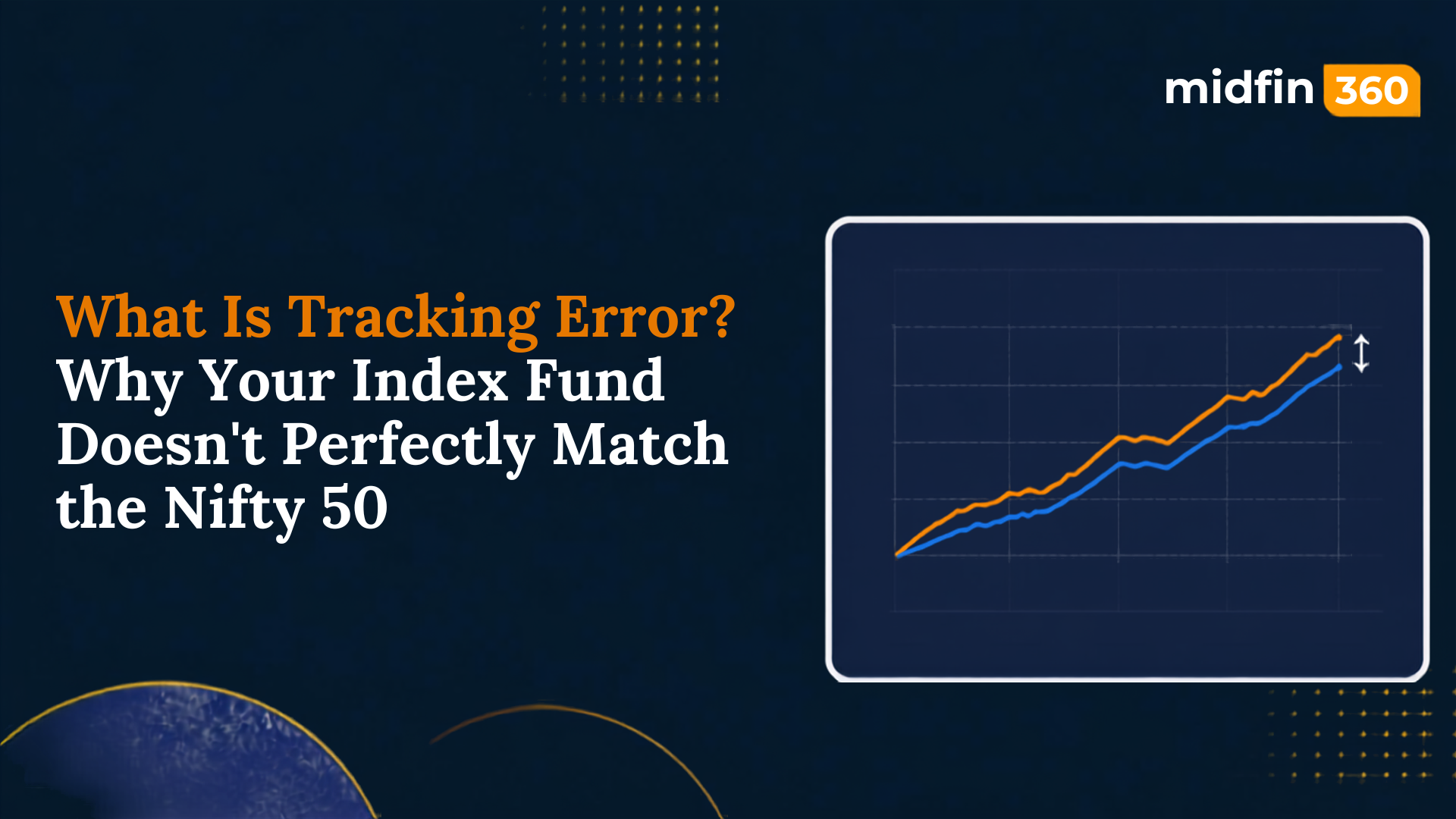
What Is Tracking Error? Why Your Index Fund Doesn't Perfectly Match the Nifty 50
Discover what is tracking error in mutual funds and why your index fund underperforms the Nifty 50. Learn to evaluate tracking difference and choose the right fund.

Debt Funds Explained: Types, Taxation, and Who Should Invest
Master debt mutual funds in India. Discover debt funds explained, types of debt mutual funds India, decode debt fund taxation 2026, and compare debt fund vs FD.

Mutual Fund Investing for First Job Salary: A Complete Guide for Freshers
Master mutual fund investing for first job salary. Discover EPF vs mutual fund SIP strategies, understand Form 16, and build your first salary investment plan.

What Is PMS (Portfolio Management Service)? A Beginner's Guide for HNIs
Discover exactly what is PMS portfolio management service. Compare PMS vs mutual fund, understand PMS minimum investment India, and decode PMS taxation for HNIs.

Best Investment Options for Coimbatore Investors in 2026
Discover the best investment options for Coimbatore investors 2026. From mutual funds to SIPs, get local wealth management strategies for entrepreneurs and NRIs.

ULIP vs Mutual Fund: Why They're Not the Same Investment
Confused about the ULIP vs mutual fund debate? Understand the ULIP lock-in period 5 years, get ULIP charges explained, and decode ULIP maturity taxation 2026.

Gold Mutual Funds vs Gold ETFs vs Sovereign Gold Bonds: Which One Actually Wins in 2026?
Compare gold mutual funds vs gold ETFs vs sovereign gold bonds for 2026. Decode the best gold investment in India, new SGB rules, and taxation limits.

Term Insurance in India 2026: How Much Term Insurance Cover Do I Need?
Wondering how much term insurance cover do I need? Explore the 15x-20x rule, Human Life Value method, and how to calculate your ideal life cover with midfin360.

Best Flexi Cap Fund: How to Choose One That Fits Your Portfolio in 2026
Looking for the best flexi cap fund in 2026? Understand flexi cap fund meaning, taxation, and how to choose the right one for your wealth creation goals.

Can Mutual Funds Beat Inflation? Here's What the Numbers Actually Show
Can mutual funds beat inflation? We dive into historical data, real vs nominal returns, and how to protect your savings in India using goal-based SIPs.

Best SIP for ₹25,000 Salary: How Much to Invest and Where to Allocate It
Best SIP for ₹25,000 Salary: How Much to Invest and Where to Allocate It

SIF vs Mutual Fund vs PMS 2026: Minimum Investment, Taxation & Which One is Right for You
Confused between SIF vs mutual fund vs PMS? We decode the SEBI minimum investment rules, taxation, and strategies to help HNIs and beginners choose right in 2026.

Top Performing Mutual Fund AMCs of 2026: Who's Winning and Why You Should Care
SIP hits ₹32,087 Cr all-time high! Discover the top-performing AMCs of 2026 — HDFC, ICICI, WhiteOak & more — ranked by real risk-adjusted returns.

Mutual Fund Capital Gains Tax Calendar 2026: Key Dates You Shouldn't Miss
Master your mutual fund capital gains tax calendar 2026. Discover advance tax due dates, the March 31 tax loss harvesting deadline, and the ₹1.25 Lakh LTCG exemption.
What is NAV in Mutual Funds? Meaning, Calculation & Why It Doesn't Affect Your Returns
Wondering what is NAV in mutual funds and if a low NAV is cheaper? Discover the NAV calculation formula, how it differs from stock prices, and why it doesn't affect your returns.

HDFC vs ICICI Prudential Mutual Fund 2026: Performance, Alpha, Risk & Which One Wins Category-by-Category
Looking for the ultimate HDFC Mutual Fund vs ICICI Prudential 2026 showdown? Compare performance, alpha, and risk to find the best mutual fund house India 2026.

Understanding Portfolio Turnover Ratio (PTR) and Its Impact on Returns
Discover the portfolio turnover ratio meaning and its impact on your wealth. Learn how the PTR formula is calculated, where to check it, and its hidden costs.

Why Two Mutual Funds in the Same Category Deliver Very Different Returns
Wondering why two mutual funds in the same category deliver very different returns? Discover the impact of style drift, AUM bloat, and manager skill on your SIPs.

9 Signs You’re Doing Well Financially
Are you hitting your wealth milestones? Discover the 9 clear signs you're doing well financially in India, from SIP discipline to smart net worth tracking.
Contra Fund vs Value Fund: What's the Real Difference and Which Suits You?
Confused between a contra fund vs value fund? Learn the SEBI definitions, risk factors, taxation rules, and the new 2026 overlap regulations with midfin360.

What is a Fund Manager? Role, Responsibilities & Why It Matters for Your Returns
Wondering exactly what is a fund manager? Discover the role of a fund manager in mutual funds, how they choose stocks, and why midfin360 regular plans matter.

Finding the Best Midcap Mutual Fund India 2026: A Complete Evaluation Guide
Looking for the best midcap mutual fund India 2026? Learn how to evaluate risk, rolling returns, and allocation to build long-term wealth with midfin360.

SIF for NRIs: Minimum Investment, Documents Required and Taxation
Explore the complete guide to SIF for NRIs. Discover the minimum investment, NRE vs NRO rules, documents required for KYC, and SIF taxation for NRI in 2026.
ETF vs FoF (Fund of Funds): Which is Better for Your Wealth Journey in 2026?
Compare ETF vs FoF (Fund of Funds) to make informed investment choices. Learn about taxation, demat requirements, SIP ease, and which suits your wealth goals.

Defence Sector Mutual Funds in India 2026: Returns, Risks & Who Should Invest
Explore defense sector mutual funds in India 2026. Discover the return potential, hidden risks, and whether these thematic funds suit your wealth creation strategy.
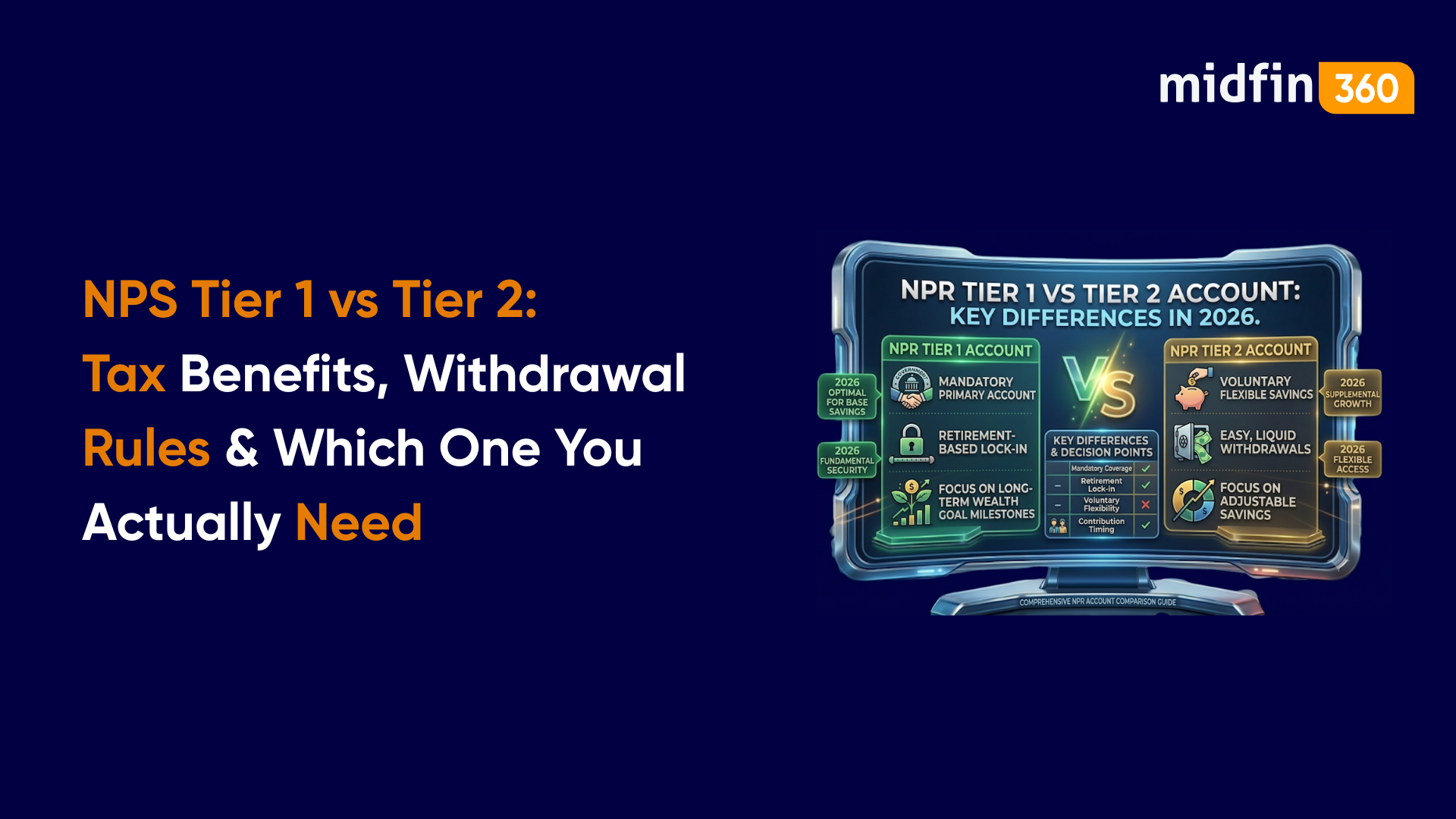
The Ultimate Guide to NPS Tier 1 vs Tier 2: Tax Benefits, Withdrawal Rules & Which One You Actually Need
Confused about NPS Tier 1 vs Tier 2? Discover the tax benefits, withdrawal rules, lock-in periods, and which National Pension System account you need to build wealth with midfin360.
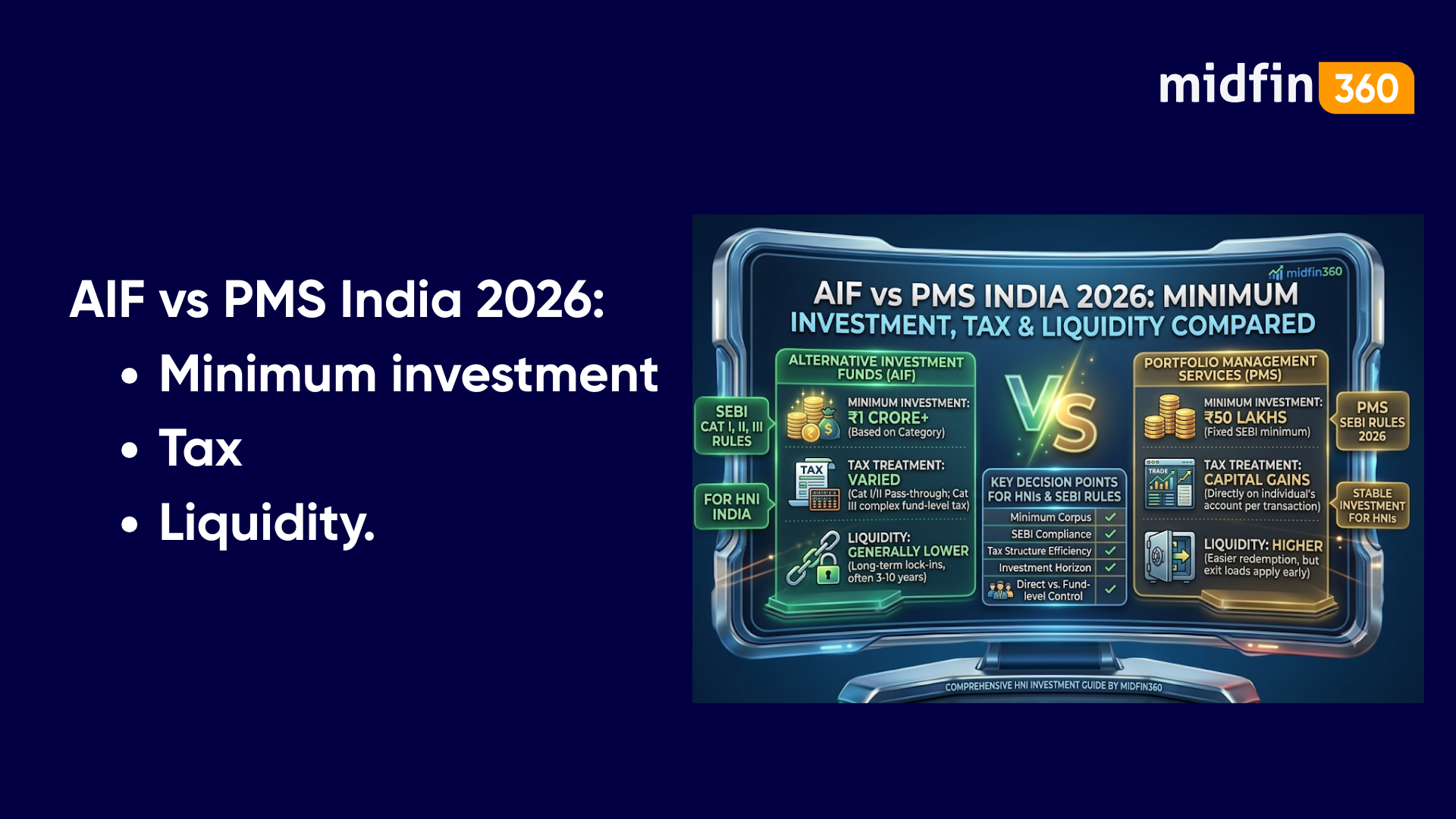
AIF vs PMS India 2026: Minimum Investment, Tax, Liquidity & Who Should Choose What
AIF vs PMS India 2026: Compare minimum investment, tax, and liquidity. Discover the best investment for HNI India, SEBI rules, and how midfin360 helps you invest.

Why Flexi Cap Funds Are Attracting Investors Despite Market Volatility | 2026 Guide
Discover why Flexi Cap Funds remain a popular choice despite market volatility. Learn their benefits, risks, performance potential, and whether they fit your investment goals in 2026.

Equity Mutual Fund Inflows Hit 12-Month Low in 2026 | Should You Continue Your SIP?
Equity mutual fund inflows have hit a 12-month low in 2026. Discover why mutual fund inflows are falling, what AMFI data reveals, and why you should continue your SIP.

ITR Due Dates AY 2026-27: Your Complete Filing Deadline Guide
Missing the ITR due date AY 2026-27 can lead to heavy penalties. Explore the complete ITR filing last date 2026 guide, understand tax forms, and learn how midfin360 helps.

Term Insurance vs Life Insurance: What's the Real Difference?
Term insurance and life insurance aren't the same thing. Here's the real difference, which one fits your needs, and the costly mistake most buyers make.

Why is the Stock Market Up Today? 5 Reasons for the Sensex Nifty Rally Explained
Sensex and Nifty just posted their sharpest gains in weeks. Here's the real reason behind the rally — and whether it changes anything for your SIP.

How to Evaluate a Fund’s Historical Performance Properly: A Comprehensive Guide for Indian Investors
Past performance is not a guarantee of future results — but when analyzed correctly, it offers powerful insights. This comprehensive guide explains how Indian investors can evaluate mutual funds using rolling returns, Sharpe ratio, alpha, benchmark comparison, expense ratios, and SEBI’s Risk-o-Meter to make informed, data-driven investment decisions.

If the AI Bubble Bursts, What Happens to Your Mutual Fund?
AI bubble fears are real. But does it affect your SIP or mutual fund in India? Here's what every investor needs to know before hitting pause.

What Is EGR? The New Way Indians Can Own Gold Without a Locker
EGR is now live on NSE. Buy, sell & hold real gold in your demat account — no locker, no purity worries. Here's everything Indian investors need to know.

NPS Tier 2 vs Mutual Funds 2026: Returns, Tax & Withdrawal Rules
Compare NPS Tier 2 vs mutual fund India. Discover withdrawal rules, tax benefits, returns, and how to choose the right flexible investment plan for your goals.

SIP vs Lump Sum Investment: Which Strategy Wins in a Volatile Market? (2026 Guide)
SIP or Lump Sum — which wins in a volatile market? Compare returns, risks & strategies to pick the best investment approach for 2026.

What is AMFI-Registered? Why It's the First Thing to Check Before Investing in Any App
Wondering about AMFI registered meaning? Discover why choosing an AMFI and SEBI registered distributor is vital for safe mutual fund apps in India.

Why Your SIP Is Not Growing: 7 Mistakes Indian Investors Make (And How to Fix Them)
Is your SIP not growing? Discover 7 common SIP mistakes Indian investors make, from ignoring step up SIPs to poor asset allocation, and learn how to fix them.

Flexi Cap vs Multi Cap Funds: Which Should You Choose in 2026
Confused between flexi cap vs multi cap fund in 2026? Learn the key differences, SEBI rules, historical fund returns, and tax implications for your SIP.
FD vs SIP in 2026: what should you choose in a falling interest rate environment?
In a falling rate environment, the FD vs mutual fund 2026 debate is crucial. Discover the best investment option India 2026 and build wealth with midfin360.

SWP Explained: How to Create a Monthly Income from Mutual Funds After Retirement
Discover how an SWP (Systematic Withdrawal Plan) in mutual funds can generate a steady, tax-efficient monthly income after retirement. Start planning with midfin360.

ELSS vs NPS vs Tax-Saving FD: Best Tax-Saving Investments Under Section 80C in FY 2026–27
Compare ELSS vs NPS vs Tax-Saving FDs to discover the best tax-saving investments under Section 80C in FY 2026–27. Build wealth strategically with midfin360.

SIP Investment in 2026: How to Start, How Much to Invest, and Which Funds to Choose
Start your SIP Investment in 2026 with midfin360. Discover how to start, how much to invest, and the right regular mutual funds for long-term wealth creation.

SEBI Update: Voluntary Folio Lock-in Facility by Franklin Templeton, LIC Mutual Fund & ICICI Prudential Mutual Fund – Secure Your Investments with Debit Freeze Feature
In a digital age where cyber fraud is a growing concern, safeguarding your hard-earned wealth is just as important as growing it. With the introduction of the Voluntary Folio Lock-in (Debit Freeze) facility by major asset management companies like Franklin Templeton, LIC Mutual Fund, and ICICI Prudential, investors now have a powerful tool to prevent unauthorized redemptions while allowing their SIPs to continue uninterrupted. Discover how this SEBI-backed initiative works and how investing through regular plans on midfin360 adds a human layer of security to your portfolio.

SEBI’s New Expense Framework: Breaking Down the Shift from TER to a More Transparent BER Model
Discover what this unbundling means for your SIPs, how it enhances the value of expert distributor guidance, and how you can track your wealth on the midfin360 app.

Life-Cycle Funds: SEBI’s New Approach to Goal-Based Investing
Discover how SEBI's new Life-Cycle Funds simplify goal-based investing in India. Learn about auto-rebalancing, glide paths, and building wealth on midfin360.

WhiteOak Removes Exit Load for 16 Mutual Funds: What It Means for Indian Investors
In a highly investor-friendly move, WhiteOak Capital Mutual Fund has announced the complete removal of exit loads for fresh investments across 16 of its equity and hybrid schemes, effective April 27, 2026. But what does a "zero exit load" mean for your long-term wealth creation? We break down the policy change, list the benefiting funds, and explain why having the right distributor guidance is more crucial now than ever.

How to Handle Underperforming Funds in Your Portfolio
Wondering how to handle underperforming mutual funds? Learn when to exit a mutual fund, diagnose style drift or AUM bloat, and calculate exit load and taxes.

Mutual Fund Jargon Buster: 40 Terms Every Investor Should Know
Stepping into the world of mutual funds can feel like learning a new language. From AUM and NAV to XIRR and SWP, the financial world is filled with acronyms. This ultimate mutual fund jargon buster breaks down 40 essential terms every Indian investor needs to know to make confident, informed wealth creation decisions.
What Are Index ETFs and How Do They Differ from Index Funds?
Understanding the difference between Index ETFs and Index Funds.

How Global Events Impact Indian Mutual Funds: US Fed Rates, Wars & Currency Risk Explained
Wondering how global events affect Indian mutual funds? Learn how US Fed rates, FII outflows, wars, and currency risks impact your SIPs and wealth creation.
How to Switch Funds Without Losing Tax Benefits
Switching between mutual funds can help investors improve portfolio performance, but doing it without proper planning can lead to unnecessary taxes and exit costs. Understanding how capital gains tax, holding periods, and exit loads work is essential before making a switch. By using strategies like waiting for the long-term holding period, utilizing the ₹1.25 lakh LTCG exemption, and applying tax-loss harvesting, investors can transition between funds while minimizing tax impact and protecting their long-term returns.

Periodic Review: A 6-Month Mutual Fund Health Check
Just like a routine medical check-up keeps your physical health in order, a bi-annual financial review is essential for your wealth. Discover why a 6-month mutual fund health check is critical, the performance metrics you should track, and how investing through regular plans provides the expert guidance needed to navigate market changes and achieve your long-term goals.

How to Set Up Automatic SIPs on midfin360 for Consistent Wealth Creation
Learn how to set up automatic SIPs on midfin360 for disciplined wealth creation. Master the e-NACH process and grow your investments with expert guidance.

Regular vs Direct Plan: How Investment Charges & Platform Fees Impact Long-Term Wealth
Confused by the regular plan vs direct plan mutual fund debate? Learn the true cost of DIY investing mistakes, expense ratios, and why distributor guidance matters.
Building a Low-Cost Portfolio Using Index Funds in India
Discover how to build a low-cost portfolio using index funds in India. Learn asset allocation, SIP strategies, and why regular funds via midfin360 add value.

How to Switch Mutual Funds Without Losing Tax Benefits in India: A Complete Guide
Don't let taxes stop you from rebalancing. Learn how to switch mutual funds in India tax-efficiently using midfin360’s expert-guided regular plans.

How to Read Quarterly Portfolio Updates from Fund Houses Like a Pro
Understanding quarterly portfolio updates from fund houses

The Ultimate Guide to Mutual Funds for Retirement: Building a Safe Withdrawal Plan
Plan a stress-free retirement with the Midfin360 app. Learn how to build a Safe Withdrawal Plan (SWP) using mutual funds, beat inflation, save on taxes, and secure a steady monthly income.
ELSS Myths vs Facts: Setting the Record Straight for Tax-Saving Mutual Funds
Discover the top ELSS myths vs facts. Learn why tax-saving mutual funds are powerful wealth creators, the benefits of SIPs, and how Regular plans add value.

Mutual Funds for Beginners: The Ultimate First 90 Days Checklist
Ready to start investing? Discover the ultimate 90-day mutual fund checklist for beginners. Learn how to choose funds, complete KYC, set up an SIP, and build wealth.

Exit Loads and Lock-ins: What Investors Should Know
Exit loads and lock-in periods can significantly impact your mutual fund returns if misunderstood. This detailed guide explains how exit loads work, how lock-ins affect liquidity, the difference between expense ratios and exit loads, and how investors can plan withdrawals strategically to avoid unnecessary costs.

The Role of Morningstar and Other Ratings in Fund Selection: A Strategic Guide for Indian Investors
Third-party ratings from agencies like Morningstar, CRISIL, and Value Research can help simplify the complex process of selecting mutual funds for Indian investors. These ratings evaluate funds based on risk-adjusted returns, peer comparison, and long-term performance, offering a quick snapshot of how a fund has performed historically. However, ratings are backward-looking indicators, not guarantees of future performance. Investors should therefore use them as a screening tool rather than a final decision factor, while also considering aspects like expense ratio, downside risk, fund manager consistency, and alignment with their financial goals within the guidelines set by the Securities and Exchange Board of India (SEBI).

How to Use SIP Calculators to Plan Your Financial Goals: A Comprehensive Guide to Wealth Creation
A Systematic Investment Plan (SIP) is one of the most powerful tools for building long-term wealth through disciplined investing. SIP calculators help investors estimate how small, regular investments can grow over time by harnessing the power of compounding. This guide explains how to use SIP calculators effectively by setting clear financial goals, adjusting for inflation, choosing realistic return assumptions, and using strategies like step-up SIPs. With the right planning and consistency, SIP calculators can turn financial dreams into achievable milestones.

Mutual Funds for Retirement: Building a Safe Withdrawal Plan
Retirement today requires more than saving it demands a smart withdrawal strategy. This blog explains how Systematic Withdrawal Plans (SWPs), combined with a safe withdrawal rate and proper portfolio structure, can create a steady, tax-efficient income. It also covers SEBI’s 2026 updates and practical strategies to ensure your money lasts throughout retirement.

How to Choose Tax-Efficient Funds for Your Wealth Goals
Taxes can quietly erode your investment returns if not managed strategically. In 2026, choosing tax-efficient mutual funds is no longer optional it’s essential for maximizing your net wealth. This guide breaks down how different fund categories are taxed, how to align them with your financial goals, and practical strategies like tax-gain harvesting to reduce your tax burden. Learn how to optimize your portfolio so that more of your returns stay with you not the taxman.

Portfolio Diversification with Mutual Funds - Best Practices
Portfolio diversification is the cornerstone of smart investing, and mutual funds make it easier than ever for Indian investors to achieve it effectively. By spreading investments across asset classes like equity, debt, and gold as well as across market caps and investment styles investors can reduce risk while maintaining growth potential. However, true diversification goes beyond holding multiple funds. It requires careful asset allocation, avoiding portfolio overlap, and maintaining a balanced mix aligned with your financial goals. Incorporating debt funds for stability, exploring international exposure, and periodically rebalancing your portfolio are essential strategies for long-term success. With SEBI’s evolving regulations and updated tax rules, investors must also stay informed to make tax-efficient decisions. Ultimately, disciplined and intentional diversification not over-diversification is the key to building a resilient portfolio that can withstand market volatility and deliver sustainable wealth creation.

The Psychology of Investing: Staying Calm During Market Volatility
Master the psychology of investing market volatility. Learn how to stay calm during a market crash in India, overcome loss aversion, and avoid panic selling.

Multi-Asset Funds: One-Stop Portfolio Builders?
Multi-Asset Allocation Funds are emerging as a smart solution for investors seeking both growth and stability. By investing across equity, debt, and gold, these funds aim to reduce volatility through diversification and dynamic rebalancing. But are they truly a “one-stop portfolio builder,” or just a strong foundation for a broader investment strategy?
Balanced Advantage Funds: Auto-Rebalancing Explained
Balanced Advantage Funds (BAFs) are hybrid mutual funds that dynamically adjust their allocation between equity and debt based on market valuations. Through auto-rebalancing, they increase equity exposure when markets are cheap and reduce it when markets become expensive. This strategy helps manage volatility, reduce drawdowns, and provide a smoother investment journey while still benefiting from equity taxation.

Sector Funds: High Return Potential or High Risk? A Deep Dive for Modern Investors
Explore the sector funds high risk high return dynamic. Understand sectoral vs thematic funds difference, concentration risk, and satellite allocation strategies.

How to Avoid Herd Mentality in Mutual Fund Investing
Herd mentality is one of the most common behavioral mistakes in mutual fund investing. When investors blindly follow popular trends, chase recently top-performing funds, or panic during market downturns, they often end up buying high and selling low—the exact opposite of successful investing. This guide explains how herd behavior influences investment decisions and how Indian investors can avoid it by focusing on goal-based investing, disciplined asset allocation, and systematic investing strategies like SIPs. By aligning decisions with personal financial goals and the risk framework encouraged by the Securities and Exchange Board of India (SEBI), investors can move beyond market noise and build a more stable, long-term wealth creation strategy.
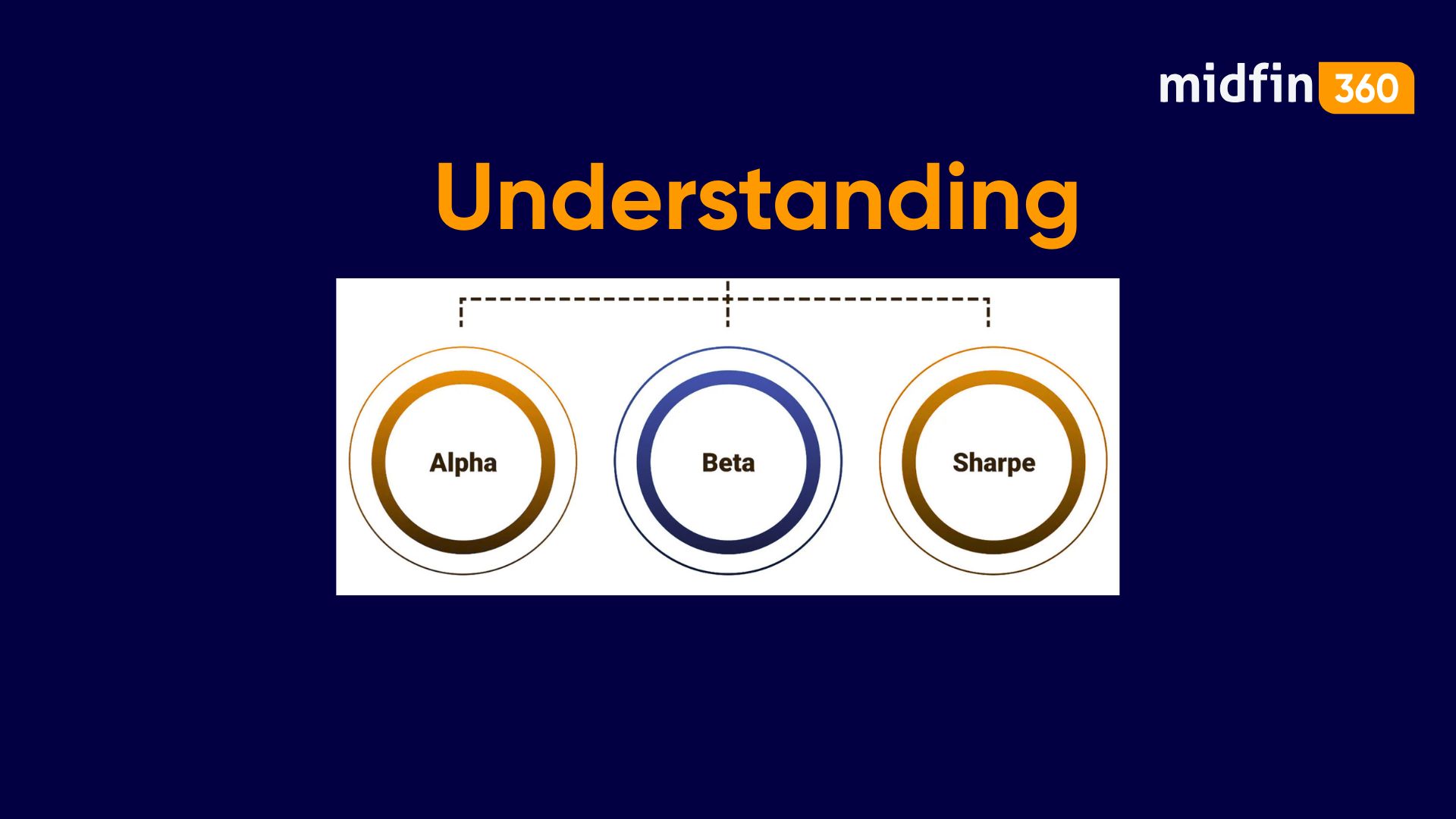
Understanding Sharpe Ratio, Alpha, and Beta: Not Scary Anymore
Understanding investment performance goes beyond simply looking at returns. Metrics like Sharpe Ratio, Alpha, and Beta help investors measure how much risk they are taking and whether their investments are truly outperforming the market. While these terms may sound complex, they are essential tools for evaluating mutual funds and portfolios effectively. By learning how these metrics work, investors can make smarter decisions, avoid emotional investing, and build a more balanced and efficient portfolio aligned with their financial goals.

Dividend vs Growth Option: Which Should You Pick?
When investing in mutual funds, choosing between the Growth and IDCW (Dividend) option is crucial. The Growth option reinvests profits, allowing your investment to grow through compounding, while IDCW provides periodic payouts that are taxed as income. Understanding the differences in returns, taxation, and long-term impact can help you select the option that best fits your financial goals.

How to Start Investing in Mutual Funds with ₹1,000
You don’t need a large amount of money to start investing. With just ₹1,000, you can begin your mutual fund journey and participate in India’s economic growth. Through a Systematic Investment Plan (SIP), small investments made consistently can grow over time thanks to the power of compounding. This guide explains the basics of mutual funds, KYC requirements, Direct vs Regular plans, and how to choose the right fund based on your goals and risk appetite. If you’re a beginner looking to start investing with a small amount, this blog will help you take the first step confidently.

Top 10 Mistakes New Mutual Fund Investors Make (And How to Avoid Them)
Investing in mutual funds is one of the smartest ways to build long-term wealth, but even small mistakes can significantly reduce your returns. From chasing past performance and ignoring expense ratios to timing the market and over-diversifying your portfolio, new investors often fall into common traps that hurt compounding. Whether you’re starting a SIP or making a lumpsum investment, understanding these mutual fund mistakes can help you make better financial decisions. In this blog, we break down the top 10 mistakes new mutual fund investors make and more importantly, how to avoid them. Learn practical, SEBI-friendly investment tips to stay disciplined, manage risk wisely, and grow your wealth confidently. Smart investing isn’t about timing the market it’s about time in the market.

Index Funds vs. Active Funds: Navigating the Choice for Your Portfolio
Choosing between index funds and active funds is one of the most important decisions for today’s investors. While index funds offer low costs, simplicity, and market-matching returns, active funds aim to generate “alpha” through professional research and tactical allocation. This blog explores the advantages, limitations, SEBI’s regulatory impact, and when each strategy makes sense helping you decide whether to adopt a passive approach, active management, or a smart “core and satellite” combination for your portfolio.
The Power of Compounding: Why Start Early with SIPs
Compounding is the most powerful force in long-term wealth creation and when combined with a Systematic Investment Plan (SIP), even small monthly investments can grow into substantial wealth over time. This blog explains how compounding works, highlights the “cost of delay” through real-life comparisons, and explores how SEBI regulations ensure transparency and investor protection. Discover why starting your SIP early can make a dramatic difference in achieving your financial goals.

How Fund Managers Pick Stocks: Inside the Professional Process
Professional fund managers don’t rely on tips or headlines to pick stocks. They follow a structured, multi-stage process that includes quantitative screening, deep fundamental analysis, management evaluation, disciplined valuation models like DCF, and strict risk management. This blog takes you inside the institutional stock-picking framework and explains how professionals identify mispriced businesses, manage portfolio risk, and make data-driven investment decisions. Discover what truly separates professional investing from retail speculation.

Why Diversification Is Key in Today’s Volatile Market
In today’s volatile financial environment shaped by inflation, geopolitical tensions, shifting interest rates, and rapid technological disruption, diversification has evolved from a defensive tactic into a strategic necessity. This blog explores how spreading investments across asset classes, sectors, and geographies helps manage concentration risk, reduce emotional decision-making, and build long-term portfolio stability. Discover why diversification remains one of the most powerful tools for achieving resilience and sustainable wealth growth in uncertain markets.

How to Create an Emergency Fund Using Short-Term Funds: A Comprehensive Guide
Learn how to create an emergency fund using short-term funds. Compare liquid fund vs overnight fund and calculate how much emergency fund do I need India.

SIP Variants: Flex SIP, Step-Up SIP, and How to Use Them
SIP variant and their advantages, risks, and how to choose the right strategy for long-term wealth creation.
How Systematic Investment Plans (SIPs) Work: A Simple Step-by-Step Guide for Smart Investing
Step-by-step guide explains how SIPs work, including rupee cost averaging, compounding, and easy setup steps to start your investment journey confidently with midfin360.

Exchange Traded Funds (ETFs) in India: Complete Guide on Meaning, Types, Benefits & Why You Should Invest
Exchange Traded Funds (ETFs) are becoming a popular investment choice in India due to their low cost, transparency, and ease of investing. This guide explains what ETFs are, their types, benefits, gold ETF vs physical gold, and why ETFs are ideal for long-term wealth creation.

SIP vs Lump Sum: Which Investment Style Suits You?
Confused between SIP and Lump Sum investing? This detailed guide breaks down the key differences, benefits, risks, and ideal scenarios for both strategies. Learn how SIP helps build disciplined, long-term wealth through rupee cost averaging, while Lump Sum investing can accelerate returns during market opportunities. Discover which investment style suits your income, risk appetite, and financial goals — and why a smart combination of both may be the most powerful wealth-building strategy.

SmallCap vs Midcap vs LargeCap Funds - Finding Your Risk Level
Large-cap, Mid-cap, and Small-cap funds are not just categories of stocks they represent different levels of risk, volatility, and growth potential. This in-depth guide explains how market capitalization impacts returns, how to align your portfolio with your risk appetite, and how to build the right asset allocation strategy for long-term wealth creation.

Gilt Funds and Sovereign Bonds: Safe Havens or Overhyped?
Gilt Funds and Sovereign Bonds are often considered the safest debt investments because they carry zero default risk. But are they truly safe, or are investors ignoring interest rate volatility? This guide explains the hidden risks, interest rate sensitivity, inflation impact, and how to use Midfin360 tools to evaluate sovereign debt investments smartly.

How to Compare Funds: A Simple Checklist
Learn how to compare mutual funds using a simple and practical checklist. Understand returns, risk, expense ratio, fund manager strategy, portfolio quality, and more before investing. A beginner-friendly guide for Indian investors.

How to Build a Goal-Based Mutual Fund Plan (Home, Education, Retirement)
Goal-based investing transforms random SIPs into a structured wealth-building strategy. Instead of chasing last year’s top-performing funds, this guide shows you how to build a mutual fund plan aligned with your three biggest life goals: buying a home, funding your child’s education, and securing retirement. Learn how to calculate inflation-adjusted future costs, choose the right asset allocation (equity vs. debt), and select suitable fund categories for short-, medium-, and long-term goals. Discover how SIPs, rebalancing, and a glide path strategy protect your corpus from market volatility. Whether you are planning a 5-year home down payment or a 25-year retirement corpus, this step-by-step approach helps you invest with clarity, discipline, and purpose. Start building a goal-based mutual fund portfolio today and turn your financial dreams into measurable milestones.

Understanding Risk: How Mutual Funds Are Rated
Mutual fund risk ratings are more than just star rankings they measure how efficiently a fund generates returns relative to the risk taken.

Choosing the Right Fund House: What to Look For
Choosing the right fund house (Asset Management Company) is just as important as selecting the best mutual fund. In 2026, investors must look beyond short-term performance and evaluate the AMC’s pedigree, investment philosophy, fund manager stability, risk management systems, expense ratios, and corporate governance standards. A strong fund house follows a disciplined, process-driven approach rather than depending solely on star managers. Understanding key metrics like Sharpe Ratio, quartile ranking, AUM dynamics, and tracking error can help you assess consistency and risk-adjusted returns. Whether you are investing through SIPs or lump sum, selecting a trustworthy and transparent AMC builds the foundation for long-term wealth creation. This guide provides a professional checklist to evaluate mutual fund houses in India and make smarter, SEBI-compliant investment decisions in 2026.

Tax-Saving Mutual Funds: A Plain-English Guide to ELSS
Looking for the best tax-saving mutual funds for FY 2024-25? This plain-English guide explains everything you need to know about ELSS (Equity Linked Savings Scheme) and how it helps you save up to ₹1.5 lakh under Section 80C while building long-term wealth. With the shortest 3-year lock-in among tax-saving options like PPF and Tax-Saving FDs, ELSS offers market-linked growth potential along with professional fund management. Learn how ELSS taxation works, understand LTCG rules, compare ELSS vs PPF vs NPS, and discover whether SIP or lump sum investing is better for tax planning. If you’re under the Old Tax Regime and want to reduce your taxable income while participating in India’s equity growth story, this guide will help you make smarter, SEBI-friendly investment decisions.

Equity, Debt, Hybrid: Choosing the Right Fund Type
Wondering which mutual fund type is right for you? Explore the equity vs debt vs hybrid mutual funds debate and master asset allocation for wealth creation.

How to Read a Mutual Fund Fact Sheet Like a Pro
Learn how to read a mutual fund fact sheet like a pro—understand returns, risk ratios, fund manager details, and key metrics before you invest.
Asset Allocation Explained: Building a Balanced Mutual Fund Portfolio
Learn how asset allocation works and how to build a balanced mutual fund portfolio that matches your risk, goals, and time horizon for long-term growth.

How to Start Investing in Mutual Funds: A Beginner’s Guide
This beginner-friendly guide explains how to start investing in mutual funds in India, understand SIPs, choose the right funds based on risk, and use ELSS to save tax under Section 80C—helping you build long-term wealth with confidence.

Mutual Funds vs Fixed Deposits
Mutual Funds and Fixed Deposits are two of the most popular investment choices in India, but which one truly helps in long-term wealth creation? This blog compares mutual funds and FDs across returns, risk, inflation impact, and taxation to help you choose the right investment strategy for your financial goals. Discover why mutual funds are better suited for long-term growth, while fixed deposits play a vital role in capital safety and short-term planning.