Gold Mutual Funds vs Gold ETFs vs Sovereign Gold Bonds: Which One Actually Wins in 2026?
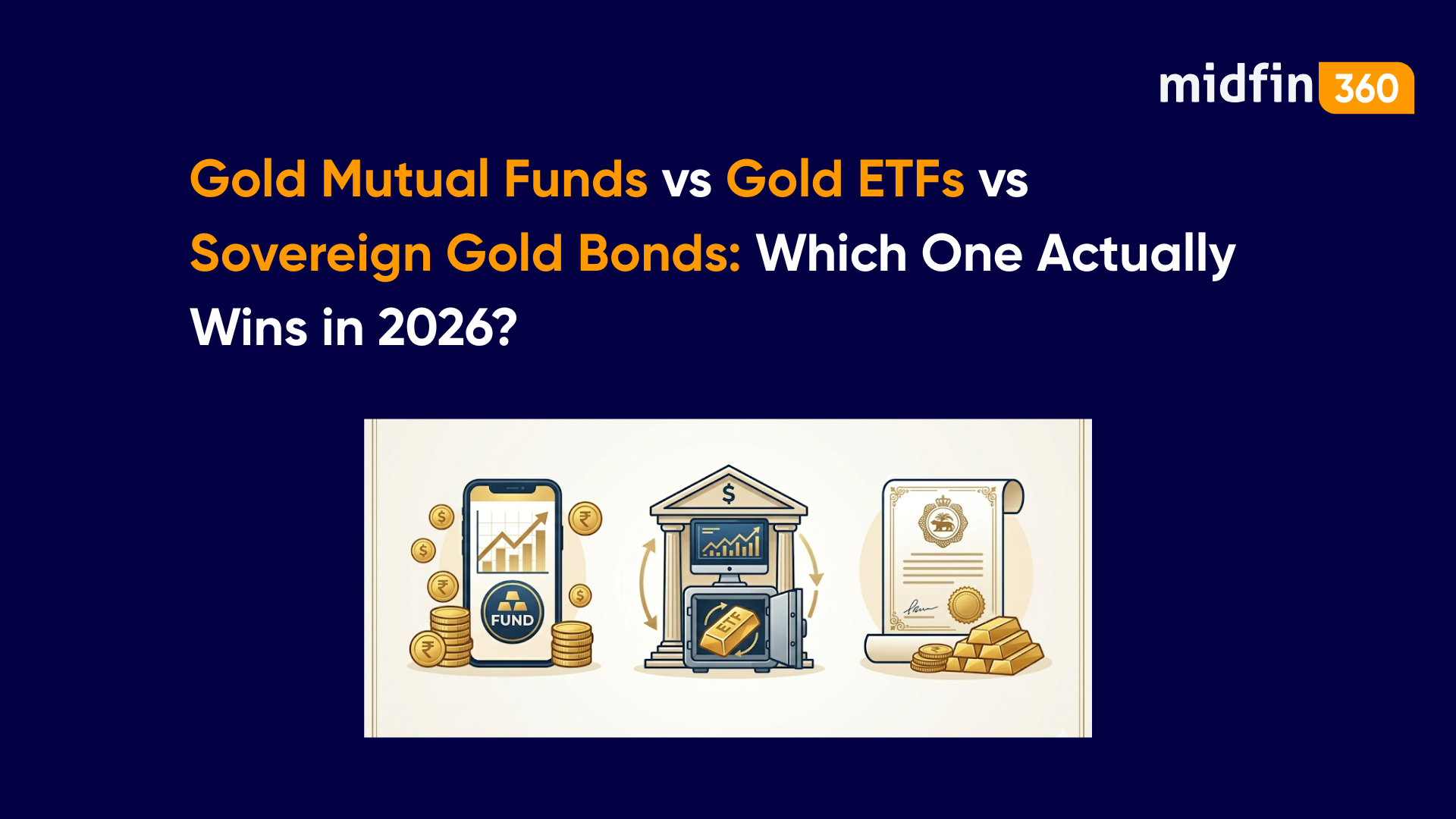
For centuries, gold has held a special place in the Indian psyche, serving as a symbol of wealth, a store of value, and a trusted safety net during economic turbulence. Today, the question isn't whether you should invest in gold, but rather, what is the best way to invest in gold India has to offer?
The landscape of gold investment has evolved dramatically. The days of solely relying on physical gold—with its associated risks of theft, high making charges, and purity concerns—are fading. In 2026, savvy investors are turning to digital alternatives. But the debate between gold mutual fund vs gold ETF India 2026 and Sovereign Gold Bonds (SGBs) remains complex.
Whether you are seeking a reliable inflation hedge, looking to diversify your portfolio, or simply starting your journey with gold investment for beginners India, this comprehensive guide will break down each option, helping you decide which digital gold asset truly reigns supreme.
Understanding the Contenders: Digital Gold Investments
Before comparing their merits, let's establish a clear understanding of what each of these financial instruments represents.
1. Gold Mutual Funds (Fund of Funds)
A Gold Mutual Fund, technically structured as a Fund of Funds (FoF), does not invest directly in physical gold. Instead, it invests the pooled money from investors into units of a Gold Exchange Traded Fund (ETF). Managed by an Asset Management Company (AMC) and regulated by SEBI, these funds offer a convenient route to gold exposure without requiring a Demat account.
Key Characteristics:
- SIP Friendly: You can easily set up a gold fund SIP India to invest small amounts regularly.
- No Demat Required: Ideal for investors who prefer traditional mutual fund investing.
- Pricing: Traded at the end-of-day Net Asset Value (NAV).
2. Gold Exchange Traded Funds (ETFs)
A Gold ETF is a passive investment instrument that tracks the domestic price of physical gold. Each unit of a Gold ETF typically represents one gram of physical gold, which is securely held in vaults by the fund house. Gold ETFs trade on stock exchanges like shares.
Key Characteristics:
- Demat Account Mandatory: You need a Demat and trading account to buy and sell Gold ETFs.
- Real-Time Pricing: They can be bought and sold throughout the trading day at live market prices.
- Cost-Effective: Generally feature a lower gold ETF expense ratio India compared to Gold Mutual Funds.
3. Sovereign Gold Bonds (SGBs)
Sovereign Gold Bonds are government securities denominated in grams of gold. Issued by the Reserve Bank of India (RBI) on behalf of the Government of India, they act as substitutes for holding physical gold. Investors pay the issue price in cash, and the bonds are redeemed in cash on maturity.
Key Characteristics:
- Government Backing: Offers the highest level of security.
- Interest Income: SGBs pay a fixed annual interest (historically around 2.5%, though you should verify the current sovereign gold bond interest rate 2026 for any active secondary market trades).
- Long Holding Period: They come with an 8-year tenor, with exit options generally available from the 5th year.
The 2026 Showdown: Comparing the Key Parameters
To determine the true winner for your portfolio, we must analyze these options across crucial parameters.
1. Liquidity and Flexibility
How quickly you can access your money is a primary concern for many investors.
- Gold ETFs: Offer the highest liquidity. Because they trade on the stock exchange, you can buy or sell them instantly during market hours, much like shares. Funds are usually credited on a T+1 or T+2 basis.
- Gold Mutual Funds: Provide good liquidity. You can redeem your units on any business day, and the redemption amount is processed based on that day's NAV. The settlement typically takes T+2 or T+3 days.
- Sovereign Gold Bonds: These are the least liquid. While they have an 8-year tenor, premature redemption is only permitted after the 5th year on interest payment dates. While you can trade them on the secondary market before maturity, liquidity can be very low, sometimes forcing you to sell at a discount to the actual gold price.
Verdict: If you need instant access, Gold ETFs win. For a balance of ease and standard redemption, Gold Mutual Funds are ideal. SGBs are only for long-term holding.
2. The 2026 SGB Reality Check
A crucial factor in the sovereign gold bond 2026 should I buy debate is availability. The government has historically issued SGBs in tranches. However, issuance patterns can change based on the government's borrowing requirements.
If new issuances are paused or infrequent in 2026, your only option is the secondary market. Buying SGBs on the exchange requires careful attention to the price, as they may trade at a premium or discount. The question "is SGB still available 2026" entirely depends on your willingness to navigate the secondary market if fresh tranches aren't active.
3. Costs and Charges
Every investment comes with costs that impact your overall returns.
- Gold ETFs: You will incur brokerage charges, Demat account maintenance fees, and the fund's expense ratio. However, the expense ratio itself is usually the lowest among the three.
- Gold Mutual Funds: You don't pay Demat or brokerage charges. However, you pay the expense ratio of the Mutual Fund plus the underlying expense ratio of the ETF it invests in.
- SGBs: There are no expense ratios or management fees. You only pay for the initial purchase (often with a small online discount during primary issuance).
Verdict: SGBs are the most cost-effective if held to maturity. Between the other two, ETFs have lower expense ratios, but Mutual Funds avoid Demat fees.
4. Taxation Rules (As of Current Regulations)
Taxation significantly impacts your net returns. It's crucial to understand how the Income Tax Department treats these investments.
- Gold Mutual Funds & Gold ETFs: Following recent regulatory changes, investments in these categories (often grouped with debt funds regarding taxation) are generally treated as short-term capital assets, regardless of the holding period. The gains are added to your income and taxed at your applicable slab rate.
- Sovereign Gold Bonds (SGBs): SGBs offer a massive tax advantage if held to maturity. The capital gains arising on the redemption of SGBs to an individual are completely tax-exempt. However, the annual interest earned is fully taxable as per your slab rate. If sold before maturity on the exchange, capital gains tax rules apply.
Verdict: For pure tax efficiency on capital appreciation (if held for 8 years), SGBs are the undisputed winner. The taxation for ETFs and MFs is identical and less favorable due to slab-rate taxation.
5. Returns Comparison: What to Expect
When comparing gold ETF vs SGB returns comparison, or looking at mutual funds, the underlying asset—gold—is the same. Therefore, the base return driven by gold price movements is nearly identical.
The differences in actual returns arise from:
- SGBs: Provide the base gold return plus the fixed annual interest, making them theoretically the highest-yielding option over the long term.
- Gold ETFs & Mutual Funds: Provide the base gold return minus their respective expense ratios and tracking errors.
Verdict: SGBs offer superior overall returns due to the added interest component, provided you hold them to maturity.
A Simpler Alternative: Multi-Asset Allocation Funds
If managing separate gold investments feels cumbersome, there's another approach. Many investors opt for Multi-Asset Allocation Funds. These hybrid mutual funds automatically invest across equity, debt, and typically, gold.
A multi-asset fund gold allocation provides indirect exposure to the yellow metal, acting as a built-in hedge within a diversified portfolio. This eliminates the need for you to actively balance a standalone gold fund, making it an excellent choice for a hands-off wealth creation strategy.
The Honest Verdict: Which Should You Choose?
There is no single "best" option; the right choice depends on your investor profile.
Who Should Choose Gold Mutual Funds?
- Investors who do not have (or want) a Demat account.
- Those who prefer disciplined investing through a gold mutual fund SIP midfin360.
- Investors who want straightforward liquidity without navigating stock exchange trading.
Who Should Choose Gold ETFs?
- Investors who already actively use a Demat and trading account.
- Those who prefer real-time pricing and the ability to execute intra-day trades.
- Cost-conscious investors looking for the lowest possible expense ratio (excluding Demat costs).
Who Should Choose Sovereign Gold Bonds (SGBs)?
- Investors with a firm long-term horizon (5-8 years) who will not need the funds prematurely.
- Those seeking the absolute highest post-tax return (due to capital gains exemption on maturity and added interest).
- Investors comfortable waiting for primary issuances or navigating the secondary market.
How midfin360 Simplifies Your Gold Strategy
Navigating the complexities of digital gold vs gold ETF and mutual funds doesn't have to be overwhelming. At midfin360, we believe in providing a seamless, consolidated approach to your investments.
Through the midfin360 app, you can seamlessly add gold exposure to your portfolio without the hassle of managing multiple platforms or Demat accounts. We offer a curated selection of Regular plan Gold Mutual Funds and Multi-Asset Allocation funds.
By investing through midfin360, you benefit from:
- Consolidated Tracking: View your gold investments alongside your equities, SIPs, and NPS on a single, intuitive dashboard.
- Goal Alignment: Ensure your gold allocation fits perfectly within your broader financial goals and risk profile.
- Distributor Support: Benefit from ongoing guidance and portfolio reviews that come standard with our Regular plan offerings.
Whether you are starting a fresh SIP or rebalancing your asset allocation, midfin360 provides the tools and expert curation you need.
Frequently Asked Questions (FAQs)
1. Is a gold mutual fund better than physical gold? Yes, for investment purposes. When comparing gold ETF vs physical gold India (or mutual funds), digital options eliminate making charges, storage costs, and purity concerns associated with physical jewelry or coins.
2. Can I start a SIP in a Gold ETF? Technically, you buy ETF units like shares, so standard SIPs are difficult. The easiest way to systematically invest is through a gold fund SIP India (Gold Mutual Fund), which handles the underlying ETF purchases for you.
3. What is the current sovereign gold bond interest rate 2026? Historically, SGBs have offered a 2.5% fixed annual interest rate. You should verify this rate on the RBI website for any specific tranches issued or traded in 2026.
4. Are gold mutual funds taxed like equity? No. Currently, gains from Gold Mutual Funds (and Gold ETFs) are treated as short-term capital assets and taxed at your applicable income tax slab rate, regardless of how long you hold them.
5. How does a multi-asset fund use gold? A multi-asset fund gold allocation typically ranges from 10% to 25% of the portfolio. The fund manager uses this allocation to provide stability and act as a hedge against inflation and equity market volatility.
6. If I buy SGBs in 2026, when can I withdraw? SGBs have an 8-year maturity. You can generally request premature redemption after the 5th year. Selling earlier is only possible by finding a buyer on the secondary market.
Conclusion
The debate between gold mutual fund vs gold ETF India 2026 and SGBs boils down to balancing liquidity, holding periods, and tax implications. While SGBs offer the best long-term, tax-efficient returns, Gold Mutual Funds remain the most accessible and convenient option for retail investors focused on disciplined SIPs and goal-based investing without Demat requirements.
Gold is a powerful diversifier, but it should be part of a broader, well-planned financial strategy. Ready to optimize your asset allocation and add the right gold investment to your portfolio? Download the midfin360 app today. Seamlessly manage your mutual funds, start regular SIPs, and take control of your wealth creation journey all in one place. Start investing with midfin360 now!

Manage all from your mobile
Take charge of your finances seamlessly — only on the Midfin360 app