Gold Mutual Funds vs Gold ETFs vs Sovereign Gold Bonds: Which One Actually Wins in 2026?
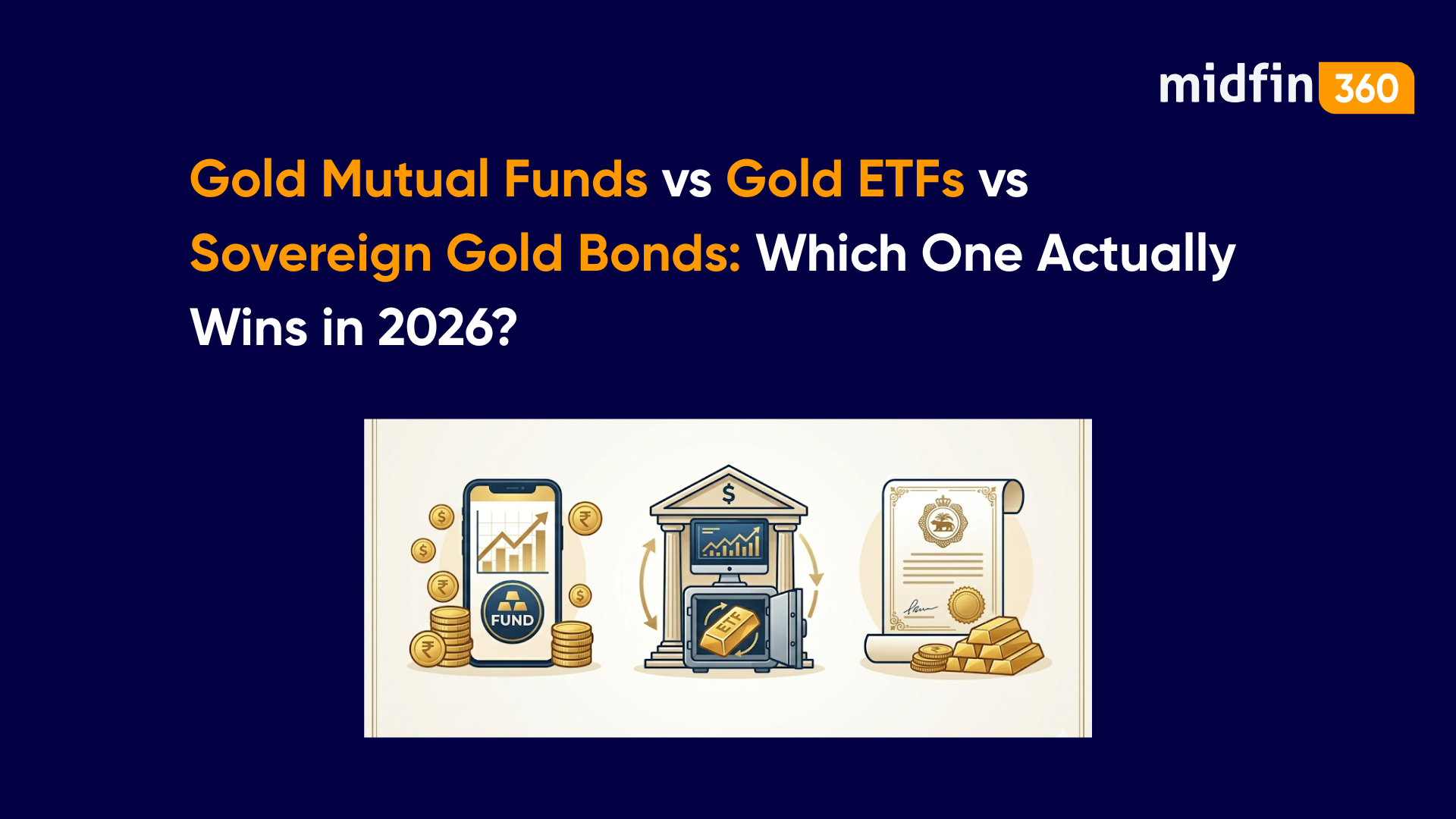
For generations, Indian families have held an deep-rooted cultural and financial affinity for gold. Traditionally, this meant buying physical jewelry, coins, or bars—a process fraught with making charges, storage anxieties, and purity concerns. Today, the modern Indian investor understands that to build serious, scalable wealth, physical gold must be replaced by financial gold.
But as we navigate the financial landscape of 2026, the options can feel overwhelming. If you are debating gold mutual funds vs gold ETFs vs sovereign gold bonds, you are evaluating the three heavyweights of the precious metals market. Each vehicle operates on a completely different structural engine, catering to different liquidity needs, tax brackets, and investment horizons.
Adding to the complexity, the recent halt in fresh government gold bond issuances has entirely altered the playing field.
Whether you are looking for the best gold investment India 2026 or trying to understand the nuanced gold mutual fund vs gold ETF difference, this comprehensive guide will decode the mechanics, the hidden costs, and the taxation rules to help you make an informed, professionally guided decision.
The Role of Gold in a Diversified Portfolio
Before choosing a specific product, it is vital to understand why you are buying gold. Gold is not a growth asset like equity; it does not generate earnings, pay dividends, or invent new technologies.
Instead, gold serves as a shock absorber.
Historically, gold acts as a hedge against inflation and currency depreciation. When geopolitical tensions rise or global markets experience severe volatility, capital tends to flee toward the perceived safety of gold. While its recent price rallies have been impressive due to global macroeconomic events, gold's primary purpose in your portfolio should remain wealth preservation, not aggressive wealth creation.
We highly recommend maintaining a 5% to 10% allocation to gold to stabilize your equity investments. You can explore exactly how to structure this defensive allocation in our detailed guide on Portfolio Diversification with Mutual Funds. Additionally, to understand the mathematics behind how defensive assets protect your purchasing power, read our analysis: Can Mutual Funds Beat Inflation? Here's What the Numbers Actually Show.
Understanding Sovereign Gold Bonds (SGBs) in 2026: The New Reality
Sovereign Gold Bonds (SGBs) are government securities denominated in grams of gold. They are issued by the Reserve Bank of India (RBI) on behalf of the Government of India, making them incredibly secure.
The Dual Return Mechanism
SGBs have historically been considered the undisputed king of gold investments because they offer a dual benefit:
- Capital Appreciation: The value of the bond is directly linked to the market price of 24-carat gold.
- Fixed Interest: Investors receive an additional, guaranteed 2.5% fixed interest per annum (paid semi-annually) on their initial investment amount. Note: This interest is fixed, while the capital appreciation is subject to market risks.
The 2026 Challenge: SGB New Issuance Stopped
Here is the critical update for 2026: The government has effectively paused fresh tranches. With the SGB new issuance stopped, primary subscriptions are no longer an option.
So, can I still buy SGB 2026? Yes, but only through the secondary market on the stock exchanges. However, sovereign gold bond secondary market purchase comes with significant hurdles. Because investors hold onto SGBs for their tax benefits, the liquidity in the secondary market is extremely low. If you try to buy them today, you will likely have to pay a substantial premium over the actual market price of gold, instantly eroding your potential future returns.
Gold ETFs Explained: The Real-Time Trader’s Choice
An Exchange Traded Fund (ETF) is a financial instrument that tracks the domestic price of physical gold and is traded on the stock exchange exactly like a regular company share.
The Mechanics
To buy a Gold ETF, you strictly require a Demat account and a trading account with a broker. Each unit of a Gold ETF typically represents 1 gram (or sometimes 0.01 gram) of high-purity physical gold, which the underlying asset management company securely stores in vaults.
The Pros and Cons
- Real-Time Pricing: If you want to capitalize on a sudden afternoon dip in global gold prices, ETFs allow you to execute a trade instantly during market hours.
- The Hidden Costs: While Gold ETFs have a low expense ratio, you must factor in annual Demat maintenance charges, brokerage fees on every transaction, and the bid-ask spread. If the secondary market lacks trading volume, you might be forced to buy the ETF at a slightly higher price than its actual Net Asset Value (NAV).
Gold Mutual Funds Explained: The Smart Investor’s SIP Route
A Gold Mutual Fund is technically a Fund of Funds (FoF). Instead of directly buying physical gold, the fund manager pools money from investors and invests it into the Asset Management Company's own Gold ETF.
Why They Excel for Long-Term Investors
The most significant gold mutual fund vs gold ETF difference lies in accessibility and behavioral discipline.
- No Demat Required: You can invest in Gold Mutual Funds purely through a Statement of Account (SoA) via a registered distributor, entirely eliminating the need for a complex brokerage account.
- The Power of SIP: This is where Gold Mutual Funds truly outshine ETFs for retail investors. While manually buying ETF units every month is tedious and incurs recurring brokerage fees, a Gold Mutual Fund allows you to easily set up an automated Systematic Investment Plan (SIP). This automation enforces financial discipline and allows you to seamlessly integrate gold into your broader asset allocation strategy.
- Professional Guidance: By investing in regular Gold Mutual Funds through a platform governed by the Securities and Exchange Board of India (SEBI), you retain the invaluable advice and ongoing portfolio monitoring of a Mutual Fund Distributor (MFD).
The Ultimate Showdown: Which Gold Vehicle Wins?
Let's break down the gold mutual funds vs gold ETFs vs sovereign gold bonds debate across three critical parameters.
1. The Liquidity Test (Gold ETF vs SGB Liquidity)
- Gold ETFs: Extremely liquid. You can sell them anytime during market hours and receive funds in your bank account on a T+1 basis.
- Gold Mutual Funds: Highly liquid. You can place a redemption request on your app at any time, receiving funds at the day's closing NAV.
- SGBs: Highly illiquid. While they have an 8-year maturity and a 5-year lock-in exit window, selling them prematurely on the secondary market is incredibly difficult due to a lack of buyers willing to pay a fair price.
2. The Convenience and Automation Test (Gold ETF vs Gold Fund SIP Option)
- Gold Mutual Funds: The absolute winner. Setting up a monthly auto-debit SIP takes two minutes and requires zero manual intervention thereafter.
- Gold ETFs: Cumbersome. You must log into a broker app during market hours, manually transfer funds, and manually place a buy order every single month.
- SGBs: Irrelevant for systematic monthly investing, especially with new issuances halted.
3. The Returns and Tracking Test
- SGBs: Historically provided the highest total return due to the extra 2.5% fixed interest on top of gold price appreciation.
- Gold ETFs & Mutual Funds: Both closely mirror the domestic price of gold. However, they suffer from a minor tracking error and internal expense ratios, meaning their returns will be marginally lower than the absolute raw price increase of physical gold.
Decoding Gold Taxation in 2026: A Critical Differentiator
You cannot finalize your investment strategy without understanding the gold ETF vs SGB taxation rules, which have seen significant structural shifts in recent Union Budgets by the Ministry of Finance.
Sovereign Gold Bond (SGB) Taxation
- Interest Income: The 2.5% annual interest is fully taxable based on your applicable income tax slab.
- Capital Gains: If you hold the SGB until its official maturity (8 years), the capital gains are completely tax-free. If you manage to sell them on the secondary market before maturity, the gains are taxed similarly to other unlisted debt instruments.
Gold ETF Taxation (Listed Financial Assets)
Because Gold ETFs are listed and traded on the stock exchanges, they fall under the listed financial assets category.
- Short-Term Capital Gains (STCG): If held for less than 12 months, the profits are added to your income and taxed at your applicable slab rate.
- Long-Term Capital Gains (LTCG): If held for more than 12 months, the gains are taxed at a flat rate (currently 12.5% post recent budget amendments, without indexation).
Gold Mutual Fund Taxation (Unlisted Financial Assets)
Because Gold Mutual Funds (Fund of Funds) are not directly listed on the exchange, they are treated as unlisted non-equity financial assets.
- STCG: If held for less than 24 months, profits are taxed at your applicable slab rate.
- LTCG: If held for more than 24 months, the gains are eligible for Long-Term Capital Gains (LTCG) tax at 12.5% without indexation.
To ensure you are fully prepared for your tax filings across all asset classes, keep our Mutual Fund Capital Gains Tax Calendar 2026: Key Dates You Shouldn't Miss bookmarked.
Digital Gold vs SGB vs Gold ETF: Why Digital Gold is Not on This List
You might be wondering where mobile wallet "Digital Gold" fits into this comparison. The reality of digital gold vs SGB vs gold ETF is that digital gold is currently an unregulated space.
It does not fall directly under the purview of SEBI or the Association of Mutual Funds in India (AMFI). Furthermore, every time you buy digital gold, you pay a flat 3% Goods and Services Tax (GST) upfront, instantly putting your investment at a -3% loss on day one. For serious investors looking to build long-term wealth, regulated ETFs and Mutual Funds are vastly superior, GST-free alternatives.
Why Regular Gold Mutual Funds with midfin360 Make Sense
If you are a retail investor seeking peace of mind, high liquidity, and automated discipline, Gold Mutual Funds are the most practical choice in 2026. However, how you buy them matters immensely.
Navigating DIY direct platforms often leads to disjointed portfolios where investors accidentally over-allocate to gold during geopolitical panics. By choosing to invest in regular mutual fund plans through an AMFI-registered Mutual Fund Distributor (MFD) like midfin360, you leverage expert guidance.
Our platform ensures that your gold allocation perfectly complements your broader equity and debt holdings. Your dedicated midfin360 Relationship Manager (RM) monitors your portfolio, advising you precisely when to rebalance your assets to lock in profits, rather than letting you succumb to emotional market timing.
Secure Your Financial Future with Guided Investing
Gold will always have a place in the smart Indian investor's portfolio, but the vehicle you choose to carry that gold dictates your long-term success. With SGBs becoming harder to source efficiently and ETFs requiring active trading management, regular Gold Mutual Funds offer the perfect blend of safety, liquidity, and automated discipline.
Stop managing your wealth in silos and step away from the anxiety of unguided, DIY direct platforms.
With midfin360, you gain access to a curated ecosystem of regulated financial products—from Mutual Funds and Fixed Deposits to the National Pension System (NPS). We provide the technology to track your wealth seamlessly and the human expertise to ensure your asset allocation always aligns with your life goals.
Ready to balance your portfolio with expert backing?
Download the midfin360 app and start your guided investment journey today!
Frequently Asked Questions
Manage all from your mobile
Take charge of your finances seamlessly — only on the Midfin360 app